Australian politics in 2025 combined dominance at the top with instability underneath.
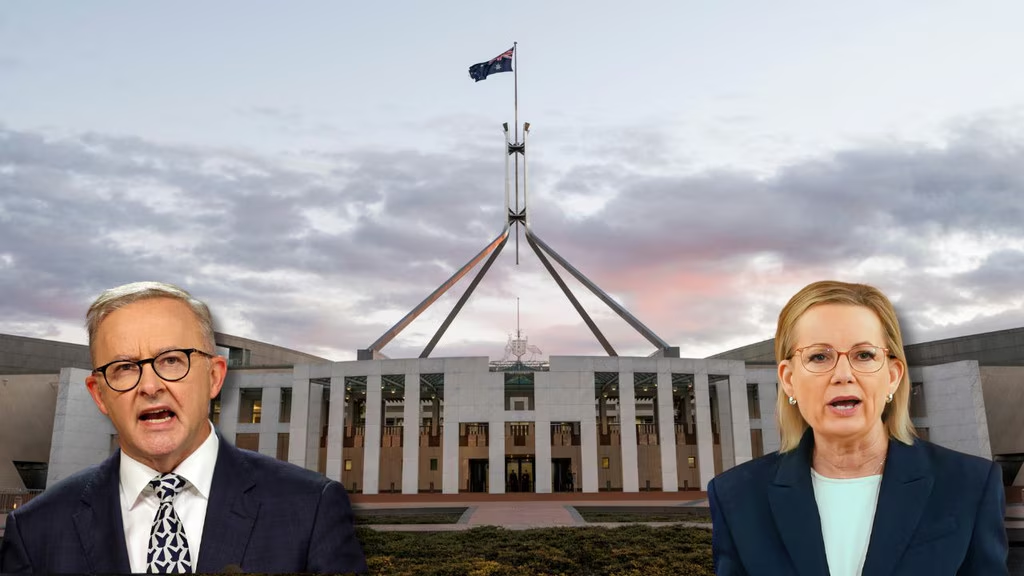
Until the massacre at Bondi Beach, Anthony Albanese’s Labor government ended the year bestriding the federal landscape: a huge lower house majority, the Coalition reduced to its lowest primary vote polling intention on record – 24 per cent – having been cannibalised by One Nation on its discontented right flank, polling about 18 per cent nationally and eclipsing the Coalition among Gen X men.
Scratch the surface, though, and a different picture emerges: a fraying electoral map, an exhausted political class and a country where most people under 65 are angry, anxious or quietly checking out. It has been, in other words, a year where Labor appeared ascendant but where the conditions for future trouble emerged – a familiar pattern in periods of political calm that mask deeper realignment.
Labor’s federal position at the end of 2025 is historically rare. It governs nationally, in most states and territories, and enjoys a comfortable two-party lead – roughly 54-46 on recent numbers – even as its primary vote remains low.
Brand Liberal, especially in the big capitals, is at its weakest since the party’s founding. There is some talk, among disaffected moderates, of building a new centre-right vehicle. Former powerbroker Walter Villatora, declaring that the Liberal Party is “finished”, is in the process of establishing Reform Australia – a venture that appears consciously modelled on Nigel Farage-style British right-wing populism.
Yet the Albanese government’s dominance is open to exogenous shocks. Post-election survey work – including the latest Australian Election Study – suggests voters now see Labor, not the Coalition, as more trusted on economic management, a reversal of decades of conventional wisdom. But trust is not baked in and heavily contingent on one thing: whether people feel their material lives are getting better or at the very least not collapsing. On that front, 2025 has been unkind.
Wages are still playing catch-up. Real incomes for renters and mortgage-holders have been squeezed by higher rates and resurgent inflation. Housing affordability and supply remain barbecue-stopper issues. And the longer Labor governs, the harder it will be to talk about a “housing crisis” as if it were something that simply happened to the country rather than something the government is now judged to own.
There’s a real risk of generational anger hardening into anti-Establishment rebellion.
Albanese’s style – cautious, decent, small-target even in office – has bought him time. The government’s economic management, mirrored by its incremental social and environmental reforms, and its relatively steady hand on foreign policy, has benefited from a contrast effect: the risk of Peter Dutton in the age of Trump 2.0 and the Coalition’s lurch into anti-net-zero and anti-immigration culture wars, Labor looks like the last grown-up at the kids’ table.
But you cannot govern indefinitely on being the least-worst option. At some point in this second term the Australian people will ask more insistently: what is this project for?
If Labor’s problem is purpose, the Liberals’ problem is more existential. The numbers are brutal. The Liberal primary hovering in the mid-20s. One Nation at record levels. Greens, teals and independents eating into its urban base. And a Coalition that chose, in response, to abandon its net-zero commitment and double down on anti-immigration rhetoric – precisely the mix most likely to repel the educated, urban middle class it needs to win back, nor diverse suburban voters, while failing to out-Hanson Hanson in the regions. The Coalition is behaving more like an angry pressure group than an alternative government.
If you squint, you can see the historical rhyme. The Liberals today look disturbingly like Labor in the 1950s and 60s: faction-ridden, culturally anchored in a shrinking constituency and ageing membership, and ideologically unmoored from the centre. The difference is that Labor, then, still sat atop a mass union movement and thick working-class institutions. The Liberals have donors, think tanks doing little thinking and unhelpful right-wing pundits.
It is little wonder some on the centre-right now dream of building something new.
The other structural story of 2025 is the normalisation – even respectability – of One Nation’s vote. One Nation is polling almost triple its 2022 election result, with support jumping to 26 per cent among financially stressed male Gen X voters. These are not fringe numbers. One in four Gen X men is now prepared to tell a pollster they would back Pauline Hanson’s party, one actively recruiting defectors such as Barnaby Joyce and promising more to come.
What explains this surge? Some of it is old-fashioned grievance: immigration, cultural change and a rebellion against progressive “woke” politics. But that misses the deeper story. One Nation’s strongest support is not among the very poor or the very rich but among men in midlife financial stress: those feeling that the deal they were promised – work hard, own a home, your kids will do better – has been quietly shredded with retirement not far off. Keep an eye on the unfolding global class-education realignment. Labor, Greens and teals dominate among degree-holders, but the former is vulnerable among the working class. The Coalition bleeds on both flanks.
One Nation mines the resentment of those who feel looked down on by “lanyard class” professionals and ignored by mainstream parties. It is not that these voters suddenly have become more racist or authoritarian; it is that economic insecurity gives cultural narratives sharper teeth; status anxiety becomes political identity.
If the right is fragmenting, left-liberal or progressive politics is too. The Greens enjoyed an annus horribilis, losing three lower-house seats at the May election, including Melbourne, home of their former leader Adam Bandt. National polls are sobering: stuck at roughly 10-13 per cent, well short of the kind of breakout one might expect amid intergenerational economic insecurity, a housing crisis and heightened climate salience. But the Greens remain formidable in inner-city seats and continue to draw young, highly educated and female voters.
The Greens’ problem is ideological and strategic, as well as cultish arrogance. They lost their heads over October 7 and ensuing Gaza tragedy. For some reason they decided to campaign on “Keeping Dutton Out”, a permissive nod to centre-left voters to plump for the real thing – Labor – to get that job done.
The teals have had a quieter but still important year: consolidating in most seats, losing only Goldstein but maintaining an image as a kind of moral-liberal conscience – pro-climate, pro-integrity, socially progressive, fiscally orthodox. Their existence is a daily reminder that a big chunk of the traditional centre-right base no longer trusts the party of Menzies, Fraser, Howard and Turnbull with their material prospects or the nation’s long-term interests.
Still, the combined presence of Greens and teals ensures Labor’s left-liberal flank remains contested territory. For a government trying to hold together a multi-class, multi-educational coalition structured around wealth and credentials, that pressure can be destabilising: progressive maximalism may animate inner-city activists but often is off-putting to small-C conservative, non-ideological voters in the outer suburbs who ultimately decide elections.
One of the most striking stories of 2025 is the growing divergence between aggregate wealth and felt security. The value of Australian dwellings has soared – close to $12 trillion by some estimates – delivering a huge wealth effect to those lucky enough to own property. At the same time, consumer confidence is stuck in the doldrums; many families report being worse off than a year ago, even as GDP continues to grow modestly.
This bifurcation – between asset-holders and the rest – is the fault line of the shifting tectonic plates reshaping our politics. It ripples through housing, inheritance, the tax system, access to education and healthcare. Yet it remains remarkably hard to talk about honestly in mainstream debate. As Sean Kelly argues in his Quarterly Essay The Good Fight, Labor has been cautious to the point of self-censorship on questions of wealth, privilege and structural inequality, aware that any discussion of inheritance or asset taxation triggers a Howard-era reflex in the commentariat. The result is a strange kind of ideological stalemate. Voters intuit that the game is rigged – that the ladder has been pulled up – but hear only technocratic language about productivity, fiscal consolidation and “targeted relief”.
Meanwhile, smaller parties and movements exploit the vacuum with bolder, simpler stories: the system is broken, elites have sold you out, your anger is justified. In this environment, the danger for Labor is not instant defeat but a slower accumulation of discontent that gradually, then suddenly, leads voters to conclude the government possibly has run out of answers. So where does all this leave us as we head into 2026 – a year of two key state elections and possible federal fireworks?
Let me stick my neck out with five concrete predictions.
1. Major-party vote doldrums and Albanese Labor facing a left-right housing pincer
I expect Labor and the Coalition together to remain stuck at or below the mid-60s in primary vote terms, with One Nation, Greens, teals and others hoovering up the rest. The easy phase of Albanese’s dominance is over. As inflation risks re-emerge and the Reserve Bank keeps rate rises on the table, cost-of-living anger will sharpen. On housing, in particular, Labor will be squeezed by the populist left and right: Greens and younger activists demanding far more radical tax measures and a populist right blaming migrants. By 2027 it will be politically impossible for a fifth-year Labor government to speak of a “housing crisis”.
2. Labor will be returned in both South Australia and Victoria (narrowly)
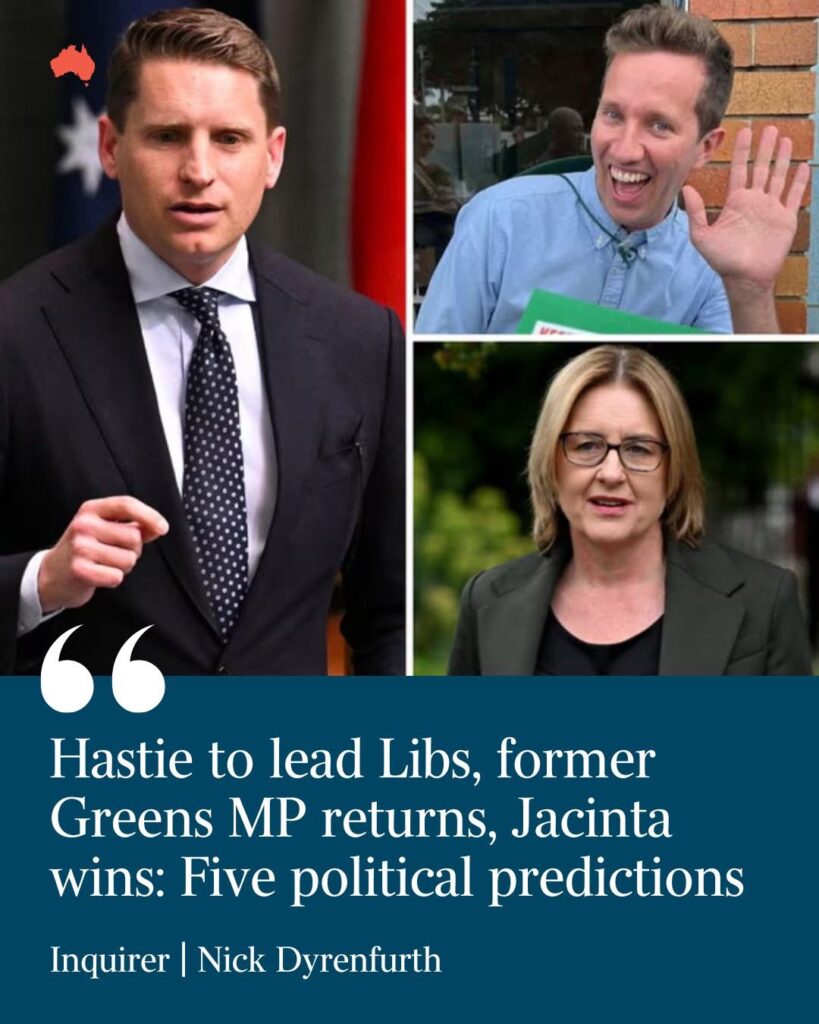
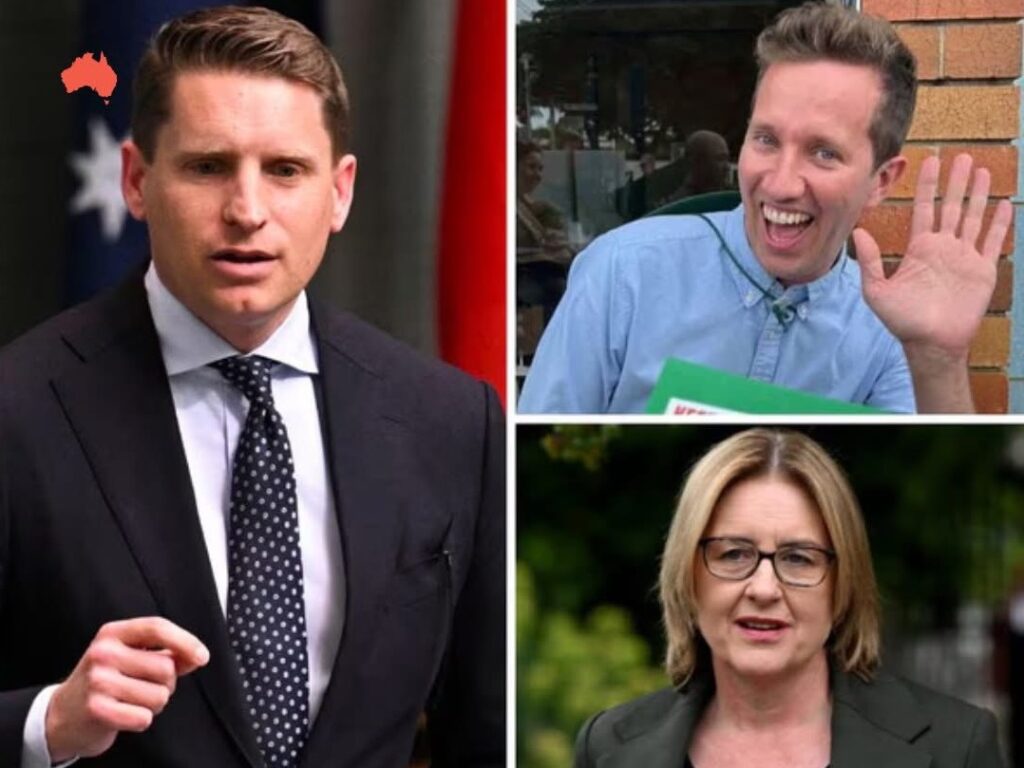
Despite the national volatility, I expect Peter Malinauskas in South Australia and Jacinta Allan in Victoria to retain office. In SA, a weak and internally divided Liberal opposition and Malinauskas’s Bob Hawke-like touch will see Labor easily re-elected. In Victoria the contest will be tighter, reflecting fatigue and specific state issues. But here, too, the federal Coalition’s drift towards One Nation talking points may poison the Liberal brand in exactly the metropolitan seats it most needs to win. The paradox is that One Nation’s presence makes it harder, not easier, for state Liberals to build a majority in big, diverse states. That said, the class-education realignment will be on display in swings in Labor heartlands.
3. One Nation will peak and plateau
I expect One Nation to maintain strong polling through much of 2026. But I also think we are close to its high-water mark. The factors driving its surge – economic anxiety, anti-elite sentiment, disgust with the majors – are also prompting talk of a more disciplined, post-Hanson populist right. My bet is that during 2026 Hanson will publicly signal, or at least privately confirm, she does not intend to contest the 2028 election and that the party’s vote begins to plateau as voters look for a vehicle that can govern, not just rage.
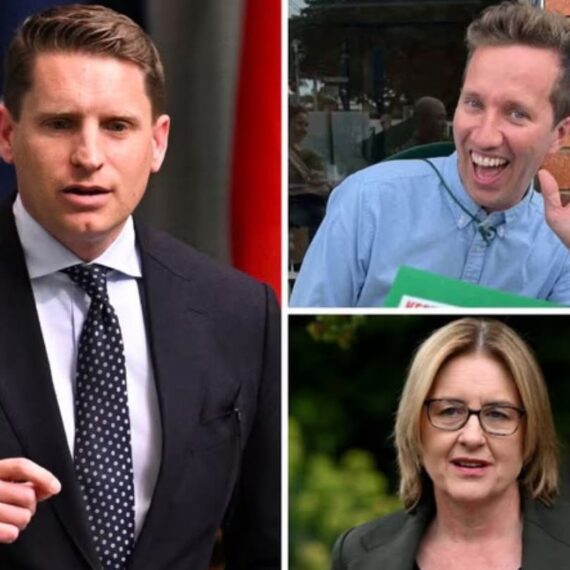
4. Andrew Hastie will become Liberal leader and reclaim much of the populist right vote
Whether through an orderly transition or an untidy coup, I think 2026 is the year the Liberals turn to Andrew Hastie. He offers, for many on the centre-right, a tempting combination: a new way of thinking about the economy, cultural conservatism and national security credentials. A Hastie leadership will not magically restore the Menzian broad church – his world view is distinctly post-liberal – but it will give some disillusioned conservative voters, including a slice of the current One Nation base, permission to come “home”. One Nation’s numbers will remain elevated, but most of the cannibalised Coalition vote will be clawed back as Hastie stakes out a more coherent – if harder-edged – project on the Right. Or might Josh Frydenberg take the party to the next election from outside of parliament?
5. Mixed Greens’ fortunes will hasten Max Chandler-Mather’s return
Victoria remains fertile ground for the Greens’ progressive urban politics. I expect further gains or consolidation at the state level in inner Melbourne. Federally, however, the party will continue to excite the activist base but keep losing ageing millennial voters. The party is now living with the real political consequences of its post-October 7 descent into a Corbynite, protest-movement posture – a form of ideological sectarianism that has alienated large sections of the mainstream electorate and reinforced perceptions of cultish, performative radicalism rather than governing seriousness. Internally, federal underperformance will sharpen questions about Larissa Waters’ leadership and fuel growing talk of former MP Max Chandler-Mather as the party’s de facto national leader heading into 2028: a younger, sharper eco-populist with a clearer story about housing and generational equity.
The through-line in all of this is simple if uncomfortable. The tectonic plates under Australian politics are shifting: class, education, culture, assets versus wages, Zoomers v Boomers.
This year was not the end of that process but its consolidation. The major parties can no longer assume loyalty; they must earn it, repeatedly, and under conditions not of their choosing. And there are exogenous shocks no party or leader can plan for.
Geopolitics has returned with a vengeance, wars are no longer distant abstractions and tangible questions of security – international and civic – have re-entered everyday political life.
Bondi sits uncomfortably in that story. Not because it rewrites the election result but because it exposes a vulnerability. In moments of domestic terror or mass violence, voters do not parse constitutional divisions of responsibility or bureaucratic process. They ask a simpler, more primal question: Does the government look in control? Right now, hesitation, mixed messaging and an instinct to deflect rather than lead feed a broader anxiety that the government is struggling to keep pace. In an era of fragmented media and hyper-amplified fear, perception hardens quickly. Once lost, authority is difficult to reclaim.
For Labor, in particular, the lesson of 2025 is that being competent is necessary but not sufficient and being seen to be incompetent on the economy and national security is politically lethal. Managerial steadiness wins you credibility; action retains trust. The former without the latter leaves a vacuum that opponents, media cycles and events happily fill.
Kerry Packer once said you only get one Alan Bond. Albanese got Scott Morrison in 2022 and then Peter Dutton. Leaders almost never get a third gift, particularly in an age of volatility, hollowed-out party loyalties, and voters quicker to punish than to forgive.