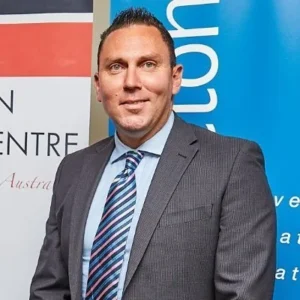
Nick Dyrenfurth
Executive Director of the John Curtin Research Centre
The controversy engulfing Adelaide Writers Week is not, as its loudest voices insist, a free-speech scandal. It is a double-standards scandal.
At the centre of the storm is the now disinvited Randa Abdel-Fattah who, in March 2024, publicly asserted: “If you are a Zionist, you have no claim or right to cultural safety. It is the duty of those who oppose racism to ensure that every space Zionists enter is culturally unsafe for them.”
This was not a clumsy phrase. Not a social media post taken out of context. It was a clear, categorical claim and implied threat – never qualified, never recanted, never apologised for. It was made in the context of her post-October 7 “activism”.
A day after the pogrom in 2023, Abdel-Fattah posted a graphic of a Hamas terrorist paragliding into Israel with a Palestinian flag as the parachute.
In December 2024, she tweeted: “May 2025 be the end of Israel … May we see the abolishment of the death cult of Zionism”.
She was involved in the 2024 doxxing scandal where the personal details of more than 600 members of a private Jewish creatives’ WhatsApp group were leaked online.
Now ask a simple question. If a public intellectual – particularly one employed by a university and feted by literary festivals – had said Palestinian Australians who supported Palestinian self-determination (obviously a supermajority) had no right to cultural safety, what would have happened? There would be no “debate”. No anguished opinion pieces about political interference. No hand-wringing about censorship. No open letters demanding indulgence.
They’d be frogmarched out of their job and out of polite society – and rightly so.
Yet when the target is “Zionists”, the rules change. Suddenly we are told the phrase is metaphorical. Or political. Or a legitimate expression of anger. Certainly not racist.
Fortunately, the gig is up. About 80 per cent of Jewish Australians explicitly identify as Zionists, not in some caricatured, hard-right sense but in the plain meaning of the word: support for Jewish self-determination and Israel’s existence. Many oppose Israel’s current government.
Of the remainder, the overwhelming majority are non-Zionists, most on religious grounds and others including secular left-wing Bundists, who nonetheless support Israel’s existence.
Eighty-six per cent of Aussie Jews consider Israel “essential” for Jews.
Anti-Zionist Jews opposed to Israel’s existence constitute perhaps 2 per cent of a community of 120,000 and even then motivations vary. Some have disengaged from Jewish communal life while embracing left-wing activism as a new faith; there are narcissistic “influencers” chasing attention or a few shekels. Some, I suspect, have unresolved mummy or daddy issues.
No one wants to silence criticism of Israel. Criticism of Israeli governments is legitimate, necessary and commonplace, most notably in Israel itself.
This is about something else: the normalisation of demonising, exclusionary language targeting Jews, provided it is dressed up as activism. It’s one of the reasons we now have a royal commission into anti-Semitism.
Which brings us to free speech. Free speech is not absolute, and it never has been. Writers festivals – whether publicly or privately funded, like the media – have the right to invite or disinvite participants as they see fit.
This case is nothing like the ham-fisted Bendigo Writers Festival saga in 2025, when political pressure was clumsily applied from outside.
Here, a board exercised its own judgment about cultural sensitivity in the wake of a national trauma. You can disagree with that judgment. But calling it censorship is wrong.
Abdel-Fattah forfeited a platform through her own egregious statements. Freedom of speech does not confer immunity from consequences.
One might have more sympathy if she had taken a path familiar to most adults in public life: acknowledge harm, express regret, clarify intent.
We have all written things we wish we’d phrased differently. But there is a world of difference between robust speech and implicitly urging intimidation or exclusion based on ethnicity.
Instead, we’re offered gaslighting claims – that Abdel-Fattah’s disinvitation was “racist”, that her mere presence was deemed threatening, that this is a smear on Palestinians as such.
The board explicitly stated it did not associate her or her work with the Bondi Beach atrocity.
The issue was her past statements. Conflating criticism of one’s rhetoric with racism empties the word of meaning.
Of course, Abdel-Fattah has hoisted herself on her own petard.
In 2024, she and nine other authors petitioned the Adelaide Festival board to remove from Writers Week Jewish-American writer Thomas Friedman, a three-time Pulitzer prize winner and critical supporter of Israel. The trigger was a poorly judged “animal kingdom” metaphor in his regular New York Times column on the Middle East quagmire.
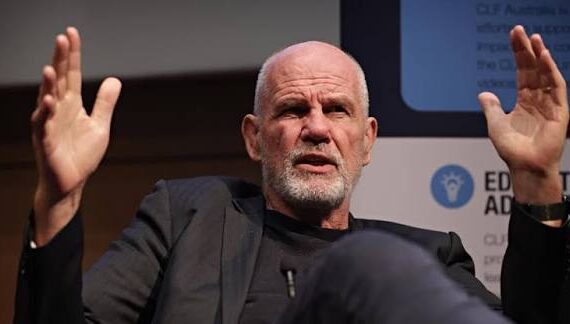
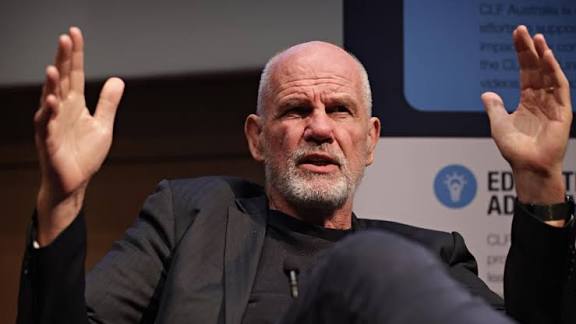
Then there is the counter-boycott. Peter FitzSimons, Jane Caro and many others have pulled out in protest. That is their right. But let’s be honest about what this also reveals.
Australia’s literary festival ecosystem has become sclerotic – overseen by a small circle of gatekeepers, with Writers Week director Louise Adler the most prominent – recycling the same voices year after year, often long after their most interesting work is behind them.
Too many festivals have become comfortable echo chambers: older, mostly Anglo, knowledge-class progressive writers saying the same things to the same audiences, while younger, more diverse, working-class and genuinely provocative writers struggle for oxygen.
When people who haven’t published a book in years occupy prime slots, something is wrong. Conservatives are unwelcome. So, too, are heterodox voices from the left.
If this controversy accelerates a long overdue shake-up, that will be no bad thing. Cultural vitality depends on renewal.
None of this requires silencing Palestinian voices. Palestinian Australians have every right to speak, write and argue for their cause, and many do so powerfully without resorting to collective demonisation of Jews.
Writers festivals exist to expand our imagination, not contract it, and not to act as ideological safe spaces.
This is not a tragedy for free speech. It is a reckoning for cultural hypocrisy and a long overdue one.